Showing posts with label Nicholas Ray. Show all posts

Thursday, December 13, 2012

10 Best Nicholas Ray Films

Well over a year ago, over at Tony Dayoub's fine fine site, Cinema Viewfinder, a Nicholas Ray Blogathon was held.  Among the many many many great contributions to this blogathon, were two by yours truly (hopefully at least half as great as the others).  These were called "The Dangerous Beauty of Nick Ray Parts 1 & 2" (originally meant as just one piece, I could not stop myself from writing, so split into two it would go) and took a film historical overview of the great auteur's equally great oeuvre.  As I went about watching the Ray films I had yet to see (and re-watching old favourites) I thought to myself what a great time for a top ten list.  I was now what one would call a Nick Ray completest, so a list was most certainly in order.  Regular readers of this site as well as those regulars over at Anomalous Material where I write a weekly series of differing top tens, know full well how excited I get at even just the mere thought of a top ten list (or for that matter a top eleven or twelve or thirteen or twenty-five of one hundred or so on and so on).  Yeah, it's a turn on - gotta problem with that!

Anyway, I ended up not fitting it into my blogathon schedule and instead, as the great procrastinator that I am, give it to you now.  I would like to preface this list with the fact that out of Nick Ray's 20 directed films (22 if you should count his two final films, the experimental group directed We Can't Go Home Again and the Wim Wenders' directed Lightning Over Water for which the German filmmaker gave Ray a co-director credit, or even 23 if you count Macao, mainly directed by Josef von Sternberg but finished by Ray who, against his own wishes was given co-credit) there has not been one I disliked.  Yes, there are a few I could (and would and have) call average and/or even mediocre, but still not a truly bad one in the bunch - even those few, like King of Kings and The Savage Innocents, that are most often panned by my fellow critics.  But the following ten are the be all and end all of Nicholas Ray cinema.  A director by the way who Godard once famously called "Cinema" itself.  So without further ado, here are my choices for the 10 Best Nicholas Ray Films.

1. Johnny Guitar (1954)  I may be showing my old school affinity with Godard and the French New Wave with my number one choice, but the sheer gaudy decadence of Ray's visuals, combined with the audacious nature of Joan Crawford and the batshitcrazy Mercedes McCambridge make this one a no-brainer - even amongst the deep-pocketed oeuvre that is the career of Nicholas Ray.  Perhaps the auteur's strangest film and the one most likely to elicit complaints and criticisms of cheesiness (pure camp and done the way camp should be done!), Johnny Guitar is nonetheless the director's boldest and bravest film as well.  Still waiting for a proper home video release in the US (my copy is a European PAL version) let alone its rightful, and hopefully inevitable, transfer onto Bluray, this bizarro-world western is a film I could watch over and over and over again without ever tiring of it.

2. Rebel Without A Cause (1955)  The first Nick Ray film I ever saw (around the age of thirteen or so) and probably the most iconic, thanks to the tragic status of James Dean, this prototypical teen angst motion picture is an emotionally draining, psychologically searing, philosophically drenching cinematic event - and that is a description  without adding extra hyperbole.  The story of three teens, played by Dean, Natalie Wood and Sal Mineo (all dying violent deaths, at 25, 43 and 37 respectively) trying to cope with the complexities of life, and the pressures of growing up (and varying degrees of parental problems), this film is probably the director's most emotionally intense work, and yes, Ray's wiles with a camera make it worthy of inclusion here, but much of this hullabaloo, much of this rather, for lack of a better term, magical touch, has to do with Ray's allowing method actor Dean to do his own improv thing throughout the film.  Oh yeah, and it looks damn beautiful as well.

3. In A Lonely Place (1950)  A cynical Humphrey Bogart.  A sexy Gloria Grahame.  A salacious murder.  Film noir.  Nick Ray.  Who could ask for anything more?  In a Lonely Place tells the story of a Hollywood screenwriter who has had a rather bad run of luck, and who is suspected of the murder of a young hat check girl who is found dead the day after spending the night at his place.  Bogie plays the screenwriter with his typical blend of machismo and urbane refinement.  Meanwhile, we also get Gloria Grahame as the new neighbour and obvious love interest for our hero.  But that is just it.  Is this guy really a tragic heroic figure brought down by innuendo and bad timing, or is he indeed a cold-blooded killer?  We do get an answer one way or the other by film's end, but before that, the question remains looming in the air, ready to destroy everyone and everything around it.  The sexual chemistry between Bogie and Grahame is rather palpitating, and Ray's weaving, voyeuristic camera, makes it all the more intriguing.

4. They Live By Night (1949)  This was Ray's first film.  It was made in 1947, but due to the chaos of Howard Hughes' takeover of RKO, it was not released for two years.  Meanwhile, many big names in Hollywood saw the film via private screenings, leading to Hitchcock casting Farley Granger in Rope, and Bogart hiring Ray to direct Knock on any Door.  Once it was released, it became sort of the prototype for the couple on the run movie, influencing everything from Gun Crazy to Bonnie and Clyde to Badlands to (of course) Robert Altman's remake, Thieves Like Us.  Granger, along with Cathy O'Donnell, who, story be told, was handpicked by Granger, play a young couple on the wrong side of the law.  Innocent (the naive kind of innocent) and in love, these two play the tragic lovers/heroes of the story.  Raw and natural, as is often the case for directorial debuts, this is probably Ray's most grounded picture - and in this grounding, we get a story of harrowing circumstances, done in the most cinematically innocent way.

5. On Dangerous Ground (1952) The first act of this film plays out like a gritty police procedural - something akin to the cop shows of today - the second and third acts, though still full of intensity and urgency, come off as a more lyrical kind of storytelling.  These two sides of Ray's proverbial coin - the roughness of They Live by Night alongside the smoothness of In a Lonely Place - come together to make this tale of hard-boiled NY police detective Robert Ryan and bitter and blind Ida Lupino, soar with the most powerful of wings.  Watching these two stellar - and often overlooked and/or underappreciated - actors pair off against each other, is worth the price of admission alone.  Ray's weaving, sometimes invasive, sometimes ethereal camera, makes it a bargain indeed.

6. Bigger Than Life (1956)  I first saw this film just last year, projected on the big screen, and I was mesmerized from beginning to end.  Ray's sultry use of colour, his play with lighting and shadows and tilted camera angles, the bravura performance of James Mason - possibly the actor's greatest performance - all come together in an explosive and quite harrowing drama.  On the edge, both thematically and stylistically, Bigger Than Life tells the story of a drug addict, back in a time when films did not readily breach such divisive subjects - but then, Nick Ray was never known as one who would shy away from controversy.  Of course, the bigger controversy came not with drug addiction, but the way Ray portrayed the American family and the so-called values that went with them.  Again, that is Nick Ray, and, as I and Jean-Luc Godard stated earlier, he is cinema.  And speaking of Godard, in 1963, the director named this film one of the Ten Best American Sound Films ever made.

7. The Lusty Men (1952)  Yes, Ray was supposedly bisexual, and yes, there is more than it's fair share of homoeroticism not so hidden away in this appropriately titled film, but this does not mean this isn't a manly film.  A real man's man kind of film.  The kind of film where men are men and...um, yeah, anyway, I digress.  Seriously though, this Robert Mitchum picture is truly a manly movie.  A movie for men, as the Spike channel has been heard to say.  It is the story of a retiring rodeo buck, played with the usual barrel-chested charm associated with Mitchum, and the newbie he takes under his wing, played with the usual sideways-glancing snarkiness of Arthur Kennedy, and the woman who comes between them, played with the usual casual sexiness of Susan Hayward.  Full of vim and vigor, and not too low on the sexual tension, The Lusty Men takes Ray's typical undercurrent of eroticism and brings it out to the glaring forefront.

8. Run For Cover (1955)  This Jimmy Cagney western is usually criminally overlooked when discussion of Nick Ray's oeuvre comes up, and that is just a goddamn shame.  With the usual pastiche of such directors as Ford and Mann and Hawks, Ray gives his own cock-eyed subversiveness to the whole shebang, and creates a genre picture that manages to perfectly blend the classic era of the genre to the revisionist beginnings of the, then modern day cinema.  But the real reason this film is so enjoyable, other than Ray's not-so-subtle touch, is because it is always fun to watch James Cagney ply his trade - be it as a gangster, a hoofer or, in this case a cowboy. 

9. The Savage Innocents (1960)  More than any other Nicholas Ray film, save perhaps for King of Kings, this tale of an Eskimo trying to survive in the wilderness, and trying to survive the encroaching modern world, is the most often cited dud on the director's filmography.  Starring the Mexican born Anthony Quinn, an actor who probably played just about every ethnicity in Hollywood at one time or another, as Inuk the Eskimo, The Savage Innocents is often referred to as racist, but I do not think Ray had anything like that in mind when he made the film - this was just the norm for the time.  What the film really is, is pure, and sometimes quite ridiculous, fun.  Hey, and Dylan wrote a song about the whole damn thing too.

10. Born to Be Bad (1950)  This early career melodrama, much in the same vein as John M. Stahl's Leave Her to Heaven, is about a beautiful and quite manipulative young woman, who will do anything to get what she wants.  In fact, one could even say that she was born to be bad.  This manipulative young woman, someone who in less classy circumstances would be called a fucking bitch from Hell, is played beautifully by Joan Fontaine, one of my favourite actors, in one of her best, but sadly most overlooked, performances.  We also get Robert Ryan and Mel Ferrer, who are always fun to have around, but this is Fontaine's picture, and with it she runs away, and she does so with beautifully flying colours.

Well, that is it for my look at the ten best films of the man known as cinema itself, Mr. Nicholas Ray.  I suppose one could go on and bring films like Hot Blood or Party Girl, or even The Flying Leathernecks into the equation, but I suppose one should leave it at that.  To end on a quote from my number one pick, and I think this somehow strangely sums up the cinema of Nicholas Ray rather well, "There's only two things in this world that a real man needs: a cup of coffee and a good smoke."

Thursday, September 8, 2011

The Dangerous Beauty of Nick Ray - Part 2

The following is Part 2 of my humble contribution to Cinema Viewfinder's Nicholas Ray Blogathon.  Part 1 can be seen HERE.  And please take heed for there is bound to be a spoiler or two hidden away somewhere in the following post (in case you are wary of such things).  Ye have been warned.


When Nick Ray's fourth wife, Susan Ray, nee Schwartz, first came to work for the director at the tender (and quite naive) age of just eighteen (Ray was 56 at the time), she described the experience as thus: "Nick's place was all movement, a dense buzz of people with jobs to do.  The living room was the work room with couch, projector, and amassed on the floor, orderly piles of batteries, recorders, cases, lamps, gels, spools, reels, and tins around which feet stepped and heads met to talk.  Eyeing the scene with the majesty of a sunning reptile, a black camera poised on a tripod.  And groggy but perfectly easy in eyepatch and leopard-spotted bikini, there was Nick.  He prowled through the room, mumbling directions through a French cigarette hanging out the side of his mouth.  I could not hear the words, but his voice rumbled up from some startling depth like the purr from the belly of a great cat."  With a Hunter S. Thompson-like approach (yeah, I know Ray came first) Nicholas Ray was, is and always will be cinema.  Welcome to The Dangerous Beauty of Nick Ray - Part 2.  Let us continue.

After making what this critic (and huge Nick Ray fan) calls not only one of the greatest westerns ever made, but one of the best films ever made with Johnny Guitar, Ray would take another stab at the genre with the James Cagney vehicle Run For Cover.  Usually forgotten when the topic of great westerns comes around, Run For Cover is actually a rather enjoyable film, and even though it doesn't have the audacious bravura of Johnny Guitar, it is a terse western with the capability of random acts of explosive action.  Of course a lot of this has to do with Cagney (in a part that is well-suited for his unique talents) being Cagney.  The film also stars John Derek in his second film with Ray.  However, no matter how good Run For Cover was (it is one of those "fun" westerns, the kind you do not need to invest much thought into but which is slyly intelligent) it will never go down as the best Nicholas Ray film of 1955, for this is the year the director would make and release the iconic classic of teen rebellion, Rebel Without A Cause.

Released just shy of a month after the tragic death of its star, James Dean of course, Rebel Without A Cause easily acts as the very epitome of the teen angst movie that came into vogue in the 1950's.  With its vivid use of colour and swirling camera angles, not to mention one of the greatest performances to ever be put onto film, as well as its risque look at family and teen life at the time, Rebel stands as an historical marker in the era of cinema.  A groundbreaking work (and this is a description not just given out by me), Rebel took a hard look at the moral decay of society and this more than frightened a lot of the American populace.  Dean has come to symbolize the character of troubled youth (his final words before his fateful crash were "they see us.") and because of his early death (Dean was just 25 and had only three feature films to his credit - only one of which the late actor ever got to see) has become an iconic figure on the level of Marilyn and Elvis.  This should never hide the fact though (and it often does), that James Dean was a great actor.

Born of the Actor's Studio and an early proponent of the Method (others such as Rod Steiger, Dustin Hoffman, Robert De Niro, Marlon Brando and even Marilyn herself were also of this school) Dean was often "let loose" by Ray and allowed to improvise on camera (the entire opening of Rebel is an improvisation by Dean).  This of course could become very old very quickly for Dean's fellow thespians, but any complaints the other actors had were shrugged off by Ray.  Upon seeing the finished product (Ray's sixth masterpiece by the way) one has no doubt that Ray was right to allow Dean such freedoms.  Now one certainly cannot predict what would have become of Dean if he had lived and gone on acting - I like to think he would have had a Brando-esque career - but judged upon just his three films alone (East of Eden, Rebel and Giant) and the performances each director (Kazan, Ray and Stevens respectively) got out of Dean, one knows his place in cinematic history is indeed assured.

But Dean wasn't alone up there on Ray's CinemaScope screen.  Costars Natalie Wood and Sal Mineo need a bit of mention as well.  Sal Mineo, who was stabbed to death at 37, played Plato, the younger boy who for lack of a better term, falls in love with Dean's Jim Stark character.  Becoming like a son (in many ways) to Jim and Judy (Wood's character) the interactions can be seen just as much father-son as wouldbe lovers.  Many critics have read the film as such, and considering both Dean and Ray were rumoured to be bisexual, and Mineo actually did come out of the closet in the 1960's, this probably is as fair an assessment as any other.  And then there is Natalie Wood.  One of the great unsung actresses of her day (Harvard has unfairly named their worst actress award that they give out each year, the Natalie Wood), and who also died rather young (at 43 and under mysterious circumstances), almost did not get the part.  Thought of as too "clean" for the role, Ray was not going to hire her until she got into a car accident after a night of drinking (she was just sixteen at the time) and overheard her doctor calling her a "Goddamned juvenile delinquent" - Natalie would reply, "Did you hear that Nick?  I'm a Goddamned juvenile delinquent.  Now do I get the part?"  She did (as well as a brief affair with her director) and the rest as they say, is history.

Next up for Ray would be the silly yet quite fun quasi-musical romp Hot Blood.  The film stars Jane Russell as a conniving Gypsy woman who, along with her father and brother, plans on agreeing to marry a young Gypsy big wig only to run off with the cash that has been paid her as is tradition (or at least they say it is tradition).  The problem is Russell's vagabond marriage thief decides she is tired of running and goes through with the marriage (to the shocked face of her new husband who had earlier found out and agreed to go along in order to be free of his older brother's familial control).  A succulent film in every way, Hot Blood may not be a masterpiece, but it is surely up there in the Ray oeuvre.

Ray's next film however would be a masterpiece (the director's seventh and sadly final masterpiece).  Bigger Than Life, starring the bigger than life James Mason as a relatively well-adjusted professor who upon receiving the then experimental drug Cortisone for his frequent blackouts, becoming a controlling megalomaniac, tormenting all those around him, the film is a psychological Grand Guignol of cinema.  Using heavy shadows and low angles to make Mason even more ominous than the already quite intimidating actor is, Ray turned this story, based on a New Yorker article about the new drug, into a spectacle of raw, anxious, overwhelming beauty.  A dangerous beauty that Nick Ray did oh so well.  Now Bigger Than Life is more than just a Nicholas Ray film - it is a James Mason film.  Only three times in Ray's oeuvre do we see a performance that manages to outshine even Ray's mastery of the medium.  First there was Joan Crawford in Johnny Guitar, then there was James Dean in Rebel Without A Cause, and now there is James Mason in Bigger Than Life.

Now I did say that Bigger Than Life would be Ray's final masterpiece, but that should by no means infer that the audacious auteur ceased making great films - for he still had a few left in him by the end of 1956.  The first of these so-called "latter day" works was actually a film Ray had filmed prior to Bigger Than Life (just after completion of Rebel actually).  It was his third western (fourth if one were to count The Lusty Men) and it was called, and rather boldly one might add, The True Story of Jesse James.  Speculative forces claim that if James Dean had not died, Ray would have cast him as the iconic outlaw - a wild child role that would have been perfect for Dean.  Ray had tried to cast Elvis Presley in the role (just after he finished filming his debut film, Love Me Tender) but eventually the role went to Robert Wagner, who ate up the role - well as much as Robert Wagner can eat up a role.

Next up for Ray would be Bitter Victory, a war film starring Richard Burton and Curd Jurgens.  Caught in a CinemaScope desert battleground - seeming visually to be more dreamlike and surreal than anything else Ray had done - these two officers, one married to the other one's lover, must fight not just the enemy but the morality of their own selves.  Probably Ray's most introspective work, it gets the job done even if at times it feels a bit full of itself.  Ray would follow up his psychological war film with a strange little ditty called Wind Across the Everglades.  Shot on location and set at the turn of last century, it is the story of a young buck nature conservationist (played by Christopher Plummer in only his second picture and his first leading role) who must fight the Heart of Darkness-like gang of bird poachers hidden away in their swampy hideaway.  Led by the rough and tumble Cottonmouth, played with giddy delight by Burl Ives (and yes, Burl Ives can be rough and tumble) and featuring among others, Peter Falk in his film debut and circus clown Emmett Kelly (not playing a clown).  The film is a fun film to watch, even if it isn't quite up to Ray's usual standards.  In the end though, Ray was fired by the studio and was unable to finish his film.

Moving on, Ray made Party Girl with Cyd Charisse, Robert Taylor, Lee J. Cobb and John Ireland.  The story is really just standard stuff - party girl Charisse is tired of the life and falls for mob lawyer Taylor who in turn decides he is tired of the life as well and decides to get out, only mob boss Cobb and gangster Ireland have different plans - but Ray was able to twist and turn the film into something a bit more special.  Charisse's performance, though cliche'd, is highlighted by two dance numbers (how can you have Cyd Charisse in a movie and not have her dance?).  Taylor, whose character is loosely based on Dixie Davis, real life mob lawyer to Dutch Schultz, fares better, but it is Cobb and his wild beast performance that steals the show (well, except for when Charisse's legs are involved).  A beautiful picture, one of Ray's best-looking works.

Next up would be The Savage Innocents, a much-maligned film about an Inuk the Eskimo and his search for a better life for his new wife and soon-to-be born son.  The casting of Mexican actor Anthony Quinn as Inuk, though racist in a way (though more in casting than in performance), was not so out-of-the ordinary back in 1960.  After all, this was just four years after the world watched in horror as John Wayne "played" Genghis Khan - and anyway, Quinn played everyone from Italians to Spaniards to Zorba the Freakin' Greek.  If one is to be honest though, one would have to say they love this film.  Beautifully shot (even within the shots that are obvious soundstage work) and quite enjoyable throughout (we also get to see a young Peter O'Toole who asked his name be taken off due to his voice being dubbed without his permission).  If one were to name his guilty pleasure movies (though I feel no guilt) one would have to put The Savage Innocents on said list.  The film does have at least one other fan, as Bob Dylan, after seeing the film, wrote "Quinn the Eskimo".

Ray's next project would be, of all things, a Biblical epic.  King of Kings, the story of Jesus Christ as played by the mesmerizing eyes of Jeffrey Hunter (though I will always remember him as Captain Christopher Pike on the original Star Trek - yeah, I am one of those people), is a sprawling historical motion picture, unlike anything Ray had done before, and though panned initially, has received a cult following of sorts.  Featuring a young Rip Torn as the infamous Judas Iscariot and Ray pal Robert Ryan as John the Baptist, the film easily blends Biblical tales of miracles and inspiration with a more personal story of faith and belief - and Salome's dance ain't half bad either.  An interesting film history anecdote about King of Kings is the fact that it is the first big-budget, major studio sound film in English to actually show the face of Christ.  Of course with the face of Jeffrey Hunter being shown, his youthful looks (though he was 33 at the time) led people to begin referring to the film as I Was A Teenage Jesus.  However you want to look at it, it is a good, though not great film.

Then would come 1963 and 55 Days at Peking, with Charlton Heston, Ava Gardner and David Niven.  55 Days at Peking is easily Ray's least interesting film and the closest the director ever came to making a bad motion picture (more mediocre then bad actually).  Ray was a tortured individual at the time of the production, somewhat akin to the Dean persona he helped to create for Rebel. Paid a very high salary by producer Samuel Bronston to direct the film, Ray had an inkling that taking on the project would mean the end of him and that he would never direct another film again. The premonition proved correct when Ray collapsed on the set, half-way through the shooting. Unable to resume working (the film was finished by Andrew Marton and Guy Green), he never received another directorial assignment.

This doesn't mean Ray stopped being a part of cinema though.  The director would eventually take a job teaching at Harpur College of Arts and Sciences (a job he got through Dennis Hopper) and while there help produce an experimental film with his students called We Can't Go Home Again.  Shortly before the great director's death in 1979 (due to lung cancer) he would collaborate on Lightning Over Water with Wim Wenders.  As Godard said, Nicholas Ray is cinema, and even though he could, as the aforementioned experimental student film attests to, never go home again, his films will live on as an integral part of that very same cinema.  Nicholas Ray is indeed Cinema - with a capital C.

More pieces on Nick Ray can be found at the following links: Johnny Guitar / Bigger Than Life / The Lusty Men

Tuesday, September 6, 2011

The Dangerous Beauty of Nick Ray - Part 1

The following is Part 1 of my humble contribution to Cinema Viewfinder's Nicholas Ray Blogathon.  And please take heed for there is bound to be a spoiler or two hidden away somewhere in the following post (in case you are wary of such things).  Ye have been warned. 


"There was theatre (Griffith), poetry (Murnau), painting (Rossellini), dance (Eisenstein), music (Renoir). Henceforth there is cinema. And the cinema is Nicholas Ray." -Jean Luc Godard

The above quote from Godard (a quote that any self-respecting cinephile has memorized and/or posted on their blog or dorm room wall) pretty much, in one fell swoop, sums up the entirety of this piece on Ray.  To be honest I need not even go on with what I was going to say about the iconic director (the one who is cinema) for in the following bevy of words (and I do tend to use a lot of those) I could never describe so succinctly just what Nicholas Ray was and is to the whole of film history.  That of course is not going to stop me from doing just that.  So here goes - a look at the man who is cinema, and who is easily the best American director of the 1950's, Hitchcock included, and one of the greatest filmmakers of all-time (from the obvious gushing perspective of his greatest fan since Godard uttered those above words, Mr. Nicholas Ray.  And while I am at it, please allow me to once again quote the aforementioned M. Godard.

"If the cinema no longer existed, Nicholas Ray alone gives the impression of being capable of reinventing it, and what is more, of wanting to." -JLG (from his original review of Hot Blood)

Born Raymond Nicholas Kienzle in Galesville, Wisconsin on August 7, 1911 (his centennial being celebrated all year long, including a month long retrospective on TCM in October), the director, after a brief stint at the University of Wisconsin (Go Badgers!) and an apprenticeship under famed architect Frank Lloyd Wright, not to mention years as part of the leftist boho lifestyle that would bring him into a theatrical world that also involved Elia Kazan (a lifestyle that would make Ray obsessed with stories of loners and outsiders who would come to populate his films), and traveling cross-country documenting American folk music for the Library of Congress, would find himself at RKO and directing his first movie (filming began just prior to Ray's 36th birthday), the now classic film noir, "love on the run" picture They Live By Night.  

The first of many great films - a list that includes at least seven downright masterpieces (a word this critic does not use or take lightly) - They Live By Night, based on Edward Anderson's Depression era novel Thieves Like Us (upon which Robert Altman would later base his 1974 film of the same name), is a fascinating look at  a young and still quite naive con who, after breaking out of jail along with a pair of much more hardened criminals, tries to escape this life he has had thrust upon him.  Starring the great (and oft-overlooked) Farley Granger as Bowie, the aforementioned naive con, and the lovely (and again, oft-overlooked) Cathy O'Donnell as the girl who tries to save him, They Live By Night has become one of the most influential films of its genre.  Its influence on Arthur Penn's Bonnie and Clyde is unmistakable.  It was also the film that first brought Ray to the attention of his most ardent supporters, the young critics of the French cinema magazine Cahiers du Cinema, later to become the Nouvelle Vague or French New Wave.

But in reality, They Live By Night would not be the first Nick Ray film to see the proverbial light of day.  In fact it would end up being his third film to be released theatrically.  At first RKO just did not know how to market the film and this was followed by the turmoil that happened when Howard Hughes bought the studio.  The billionaire would shelve the film for what would end up being nearly two years.  Meanwhile though, as was (and is) the case in Hollywood, many producers and directors and actors had their own private screening rooms and were able to see Ray's debut film for themselves.  The story goes that it was after seeing this film that Hitchcock would cast Granger in his 1948 film Rope.  Another big name to have seen and been impressed by this film was Humphrey Bogart.

Bogart had just started up his own production company, Santana Productions, and hired Ray to direct the film Knock On Any Door, which would star Bogart as a defense attorney taking on a lose-lose case, and a very young John Derek as his lose-lose client.  This would become Ray's first film to see a theatrical release.  Pretty standard stuff really, definite lesser Ray, but still an interesting early look at the director's style.  New York Times critic Bosley Crowther would call the film "a pretentious social melodrama" and I suppose it is.  Ray would follow this up with another pretty standard film in the noirish A Woman's Secret with Maureen O'Hara and Melvyn Douglas.  This would also be the first time Ray would work with Gloria Grahame who had become his second wife the year before, and who would be such an integral part in his next completed film In A Lonely Place.  Ray and Grahame would later divorce under some pretty irreconcilable differences, but I am getting ahead of myself.

After directing the Farley Granger weepie Rosanna McCoy (and subsequently getting fired and having his name taken off the project) and finally seeing the release of They Live By Night, Ray would hit it big with In A Lonely Place.  Granted, the film received only mixed reviews upon its release and was considered to be a box office flop (the bleak ending saw to that) but the cult following the film later got (thanks again to those boys at Cahiers) turned it into a true classic.  Starring Bogart (and made by Santana Productions again) as a semi-washed-up Hollywood screenwriter who is suspected of murdering a young coat check girl he takes home one night (and giving one of, if not his finest performance), In A Lonely Place would become Ray's second masterpiece.

In A Lonely Place is a dark and quite sinister film.  As one watches the film, one is never quite sure if Bogart's Dix Steele is telling the truth or not.  Is he really the killer one must ask oneself.  In the end we know that he is not, but this doesn't take away any of the power of the film itself or Bogart's haunting performance in it.  Actually Ray had envisioned an even darker ending at first.  As tensions grow between Dix and Grahame's Laurel (she not knowing if he is a killer, he trying to control her as a woman) things finally come to a head when in the original finale Dix strangles his lover just as the police show up to tell him that they caught the real killer and he was off the hook.  Ray didn't like this ending so he changed it to have a grieving Dix leave a grieving Laurel instead.  Personally I prefer the original but then I am not the cinematic genius Nick Ray was.

It was at this time that Ray and Grahame were having problems at home.  With their marriage coming apart, Grahame was made to sign a contract that said "my husband [Ray] shall be entitled to direct, control, advise, instruct and even command my actions during the hours from 9 AM to 6 PM, every day except Sunday...I acknowledge that in every conceivable situations his will and judgment shall be considered superior to mine and shall prevail." Grahame was also forbidden to "nag, cajole, tease or in any other feminine fashion seek to distract or influence him."  The two did separate during filming but kept it a secret for fear of one or both of them getting fired because of it.  The couple would reconcile eventually but would divorce for good in 1952.  But again, I am getting ahead of myself.

Before taking on his next film, Ray would be hired to complete the film Macao when Josef von Sternberg was fired by RKO head Howard Hughes.  Ray complied but was not happy about finishing a project started by another director - especially one as greatly admired as von Sternberg.  Starring Robert Mitchum, Jane Russell, William Bendix and Gloria Grahame (during one of their better marital moments apparently), Macao was a noirish adventure story full of exotic intrigue.  Rewriting some of von Sternberg's scenes (along with pal Mitchum) Ray would complete the film in late 1950.  The film however would not be released until 1952.  Ray asked that his name not be added, as it was still von Sternberg's film in his mind, but his name was added anyway (as co-director with von Sternberg).

Next up for Ray would be the melodrama Born to Be Bad.  The film, starring Joan Fontaine in one of her finest performances, and co-starring Robert Ryan, Mel Ferrer, Zachary Scott and Joan Leslie, is actually one of Ray's most underrated films.  Quick-witted and downright nasty at times (at least certain aspects of the story) it is one of the better of the so-called Ray films.   Ray would follow this with a war picture called Flying Leathernecks.  Released in 1951, the film stars John Wayne and Robert Ryan as a pair of Marine Corps pilots during WWII.  The film itself is rather lackluster (it doesn't have the Nick Ray flair of his better films) but the back and forth between Wayne and Ryan, polar opposites in both personality and politics, made the film work better than it probably should have.   Ray had said the reason he hired Ryan for the role was because he was the only actor he could think of that could kick Wayne's ass.  It all made it work.

After giving some uncredited directing help on John Cromwell's The Racket (with pal Robert Ryan) Ray would make On Dangerous Ground, a film noir starring the aforementioned Robert Ryan and Ida Lupino.  A film basically in two parts, the first a gritty urban policer with Ryan's detective going over the line in pursuit of criminals and the second as a more laconic setting "up north" where Ryan is sent on assignment.  While the first half of the film plays out in a frenzied state of mental breakdown, the second half, where Ryan meets a blind woman played by Lupino (who incidntally directed a few scenes while Ray fell ill) and begins the road to redemption, plays out as quasi-spiritual in many ways.  On Dangerous Ground would be Ray's third masterpiece - and probably the must overlooked of said masterpieces.

Ray's next film would be a modern day western entitled The Lusty Men.  The film featured Mitchum as a broken down rodeo rider who falls in with ranch hand Arthur Kennedy and his wife Susan Hayward.  As Mitchum helps Kennedy become a champion rodeo man, to the protest of Hayward, Mitchum finds himself falling for the woman.  Playing out as part melodrama (but an appropriately manly one) The Lusty Men, Ray's fourth masterpiece, is a tragic tale of lost dreams.  It was also around this time that Ray came home one day to find his wife, Grahame, in bed with his 13 year old son from his previous marriage.  Needless to say, a divorce was right around the corner.  On an interesting sidenote, Grahame would later marry her former stepson when he was 22, and then later divorce him as well.

Next up for Nick Ray would be my personal favourite of the director's oeuvre, the strange and quite extraordinary western Johnny Guitar.  Only the director's second film in colour, Ray here first showed how he could use colour like other directors could use actors or sets.  A bold, brilliant film (the director's fifth masterpiece in case you hadn't already guessed from my initial gushing) Johnny Guitar used colour to make the film stand out even more than it normally would.  A subversive work in both its visual audacity as well as its blatant criticism of the McCarthy hearings and the blacklisting of writers in Hollywood.  Actually, Johnny Guitar, though credited to Philip Yorden, was written by Ben Maddow, a blacklisted writer.

Starring Joan Crawford as the owner of a saloon, and associate of known criminals, and Sterling Hayden as her lover, the titular Mr. Guitar, the film is a thing of pure cinematic beauty.  Crawford's dress never getting a stain even after escaping her burning saloon and running through the hills, the obvious posing and silly dialogue, Mercedes McCambridge as Crawford's nemesis (and undertoned not-so subtly with gay innuendo) overacting to pitch perfect insanity.  All these things add to the appeal of this film.  Back stories of in-fighting and Crawford's demands of never being shot in close-up unless in a properly lighted studio, add to this appeal even more.  This was the film that above all others the Cahiers critics heralded as great.  It was also this film that first made me believe a western could be just as powerful without the typical western iconography.  Sheer brilliance indeed.

The end of Part 1.  The Dangerous Beauty of Nick Ray - Part 2 can be read HERE.

More pieces on Nick Ray can be found at the following links: Johnny Guitar / Bigger Than Life / The Lusty Men

Tuesday, August 9, 2011

Nicholas Ray Blogathon

They Live by Night.  In A Lonely Place.  The Lusty Men.  On Dangerous Ground.  Run For Cover.  Bitter Victory.  Rebel Without A Cause.  Bigger Than Life.  Hot Blood.  Born to Be Bad.  Party Girl.  Johnny Freakin' Guitar.

I suppose this is my way of saying that the fine folks over at Cinema Viewfinder (which is to say, Tony Dayoub) is/are holding a Nicholas Ray Blogathon this coming September.  To be even more specific, September 5th thru the 8th.  So come on all you Nick Ray lovers out there (and you all better damn be Nick Ray lovers!) and join in on the fun.  Pieces on the great director and/or the great director's films should be posted on your blog/site sometime before September 5th and a link sent to Cinema Viewfinder.  But why should I explain it when Tony at Cinema Viewfinder can do it himself.  Hope to see you at what is destined to be a great time had by all.


Friday, March 11, 2011

My Quest To See the 1000 Greatest: The Lusty Men (1952)

The Lusty Men is #578 in  
My Quest to watch the 1000 Greatest Films

Screened 01/30/11 on DVD

Ranked #788 on TSPDT

*There be spoilers ahead for those who care about such things.

"A Fast Buck... A Fast Bronc... A Fast Thrill!" 

Judging from the title (and the film's tagline above), one could reasonably think this to be a somewhat homoerotic movie, and since it is directed by the bisexual Nick Ray, such reasonability is given that much more credence.  In all reality though, unless one were to dig deep for such things (and some will certainly dig), The Lusty Men is not all that homoerotic.  Much less so than that other Ray film, the deeply and quite obvious Rebel Without A Cause.  Anyway, this is neither here nor there when it comes to talking about the film, so I will just drop such thoughts now, and get on with the show.

Actually, this is the story of an aging (at least aging for his business) rodeo man, played with the usual macho sensitivity by the great Robert Mitchum and his befriending of a wouldbe rodeo newbie played by Arthur Kennedy, with his typical snarky charm, and (to keep the aforementioned homoeroticism at bay) the woman that is stuck in the middle - the beautiful, sad-eyed Susan Hayward.  We watch as Mitchum's Jeff McCloud teaches the insistent Wes Merritt (Kennedy) the ways (and dangers) of the rodeo world - much to the dismay of Hayward's Louise Merritt (Kennedy's suffering but faithful movie-wife) - only to fall into (an inevitably unrequited) love with Hayward.

Once Kennedy's cocksure cowboy surpasses his teacher and begins to believe the sudden hype of his newfound rodeo circuit fame (another inevitability), Mitchum begins to question what he wants out of live - or actually deepens his already questioning attitude from frame one.  What he wants (not surprisingly) is Hayward.  Of course, this being a Nick Ray film, do not waste your time hoping for the ending anyone wants - though we do get the ending that is most deserving of drama - and in a way, a happy ending for some.

"There never was a bronc that couldn't be rode, there never a cowboy that couldn't be throwed. Guys like me last forever."
- Robert Mitchum as Jeff McCloud in The Lusty Men

Wednesday, January 26, 2011

My Quest To See the 1000 Greatest: Bigger Than Life (1956)

Bigger Than Life is #575 in  
My Quest to watch the 1000 Greatest Films

Screened 09/10/10 on Blu-Ray at Midtown Cinema


Ranked #569 on TSPDT

*this is one in a series of catch-up reviews in my aforementioned quest (which should explain the rather old screening date above).


Based on a 1955 New Yorker article by Berton Roueche, entitled "Ten Feet Tall", Nicholas Ray's fourteenth film as a credited director (in a mere eight years), the story of a man who becomes addicted to Cortisone and loses his mind, had the misfortune of being a box office flop upon its initial release in 1956, as well as stirring up quite a bit of controversy from the so-called, and self-appointed, and quite self-righteous, moral majority of the times.  Seen as an all-out attack on the supposed moral fiber of 1950's, Eisenhower America, and more intimately, an attack on the family itself, Bigger Than Life, was pretty much persona non grata in the small towns of middle America.

Now there is no doubt in my mind that Nick Ray, and star and uncredited co-screenwriter James Mason, meant for this to be an attack on fifties family values, and therefore should have come as no surprise that it did bring out such wrath in so many people at the time.  Also what should have come as no surprise, considering a substantially higher rate of open-mindedness amongst the group, is that the critics of Cahiers du cinema were big fans of the film (and I am sure, the attack on our majority-imposed moral fiber) and Jean-Luc Godard called the film one of the ten best American sound films ever made.  The film today is heralded as a modern masterpiece, and I must say, now that I have finally seen the damned thing, I agree with this hearalding.

This is certainly one of Ray's better films - placed snugly amongst On Dangerous Ground, They Live By Night, In A Lonely Place and Rebel Without A Cause (though Johnny Guitar still stands above them all) - as well as one of his deeper ones, psychologically speaking.  Mason's performance as the titular mental giant (at least in his own drug-induced psyche) is the best this critic has ever seen.  Showing us a psychosis that is both inhuman and monstrous, but at the same time, sadly sympathetic, Mason devours the shadow-laden screen of Ray's cinema and turns the film into his own.  This is a feat that is extremely difficult to do with Ray at the helm.  No offense to the talents of actors such as Farley Granger or Humphrey Bogart or Robert Ryan or Ida Lupino, but such a feat has only happened two other times in Ray's oeuvre - James Dean in Rebel and Joan Crawford in Johnny Guitar.

Still though, Bigger Than Life is no doubt a Nicholas Ray movie, with its ominous camera and succulent colour scheme, as well as the aforementioned shadow-laden sets.  The type of movie that breathes life into the cinema and keeps the pure cinephilia of young turks like myself so deliriously enamoured with the medium for all-time.

Tuesday, October 12, 2010

Film Poll #4: The Results

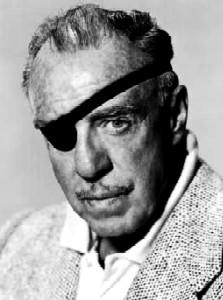
Just the fact that there have been enough eye-patch wearing directors to make an entire poll about is kind of amazing in its own right.  The fact that Nick Ray won that very poll is a giddily expectant outcome.  Actually I figured it would be a race between Ray and Fritz - and it was.  John Ford expectantly came in third with Andre de Toth finishing in fourth (w/ two votes).  I am actually surprised he got any (since he is ostensibly the least well known of the five choices - though he did create what is probably the best 3D movie ever made (House of Wax for those unsure) which is quite an accomplishment considering.  I do kind of feel feel sorry for poor Raoul Walsh though, without even a single pity vote (c'mon, he did make High Sierra the acerbic Bogie, the lovely Lupino and that annoying dog that just would not shut the hell up!).  Anyway, here are the results, based on 28 total votes.

Nicholas Ray - 11 (39%)
Fritz Lang - 9 (32%)
John Ford - 6 (21%)
Andre de Toth - 2 (7%)
Raoul Walsh - 0 (0%)

The next poll will be coming tomorrow or the next day (as soon as I figure out what it will be).  And remember, if you have any ideas for future film polls, feel free to pass those ideas on via the comments section here.  And remember to tell all your friends, because the more poll participants, the better.  See you soon.


Monday, October 4, 2010

Film Poll #4:
Favourite Eye-Patched Director

It's Monday morning and that means time for the new Film Poll here at The Most Beautiful Fraud in the World.  This week it is a somewhat unique selection.  You are asked to name your favourite eye-patch-wearing Director.  The funny thing is there are actually five to choose from.  In fact there was even a retrospective last year at Anthology Film Archives featuring these very same directors - V.A. Musetto, in the New York Post, called it "the invasion of the one-eyed auteurs".  My personal fave is Fritz Lang because he wears an eye-patch AND a monocle.  How freakin' cool is that!?

Anyway (as they say), go on over to the the left-hand sidebar and make your choice before it's too late - deadline is next Sunday night at the witching hour.

Tuesday, August 24, 2010

366 Weird Movies Guest Review: Johnny Guitar (Nicholas Ray, 54)

Well, it would seem that I am branching out.  I have begun what hopefully will be a long and fruitful guest reviewing gig over at 366 Weird Movies.  It is a site dedicated to (obviously) weird movies.  From the slightly odd to the downright freakish - and everything in between.  My first piece for the site is on Nicholas Ray's Johnny Guitar.  Perhaps not the strangest film around, but its verging on camp ideals make it at least in the honourable mention category.


Friday, October 16, 2009

Johnny Guitar (Nicholas Ray, 1954)

"There was theatre (Griffith), poetry (Murnau), painting (Rossellini), dance (Eisenstein), music (Renoir). Henceforward there is cinema. And the cinema is Nicholas Ray." - Jean-Luc Godard

I watched Johnny Guitar last night and all I have to say is - let the gushing begin.  Seriously, Johnny Guitar is what cinema was and still should be.  Combining Ray's unique talent for visually luscious filmmaking with a genre redefining of the western - Ray's film can be quite ambiguous when it comes to who is wearing the white hat and who the black - dialogue that is beautifully over the top and a not-so-veiled stand against McCarthyism and Hollywood blacklisting.  And on top of all that - Joan Freakin' Crawford!

The film that Truffaut once called "Hallucinatory Cinema", Johnny Guitar is almost magical in its approach to what film is (and again, still should be).   Watching it on the big screen (as I finally did after years of adoring it sitting on my couch in my living room) one is mesmerized by each and every frame of this sexy, delicious, ravenous piece of film history.  Nary a false note is heard - a thing that can be said of only about six or seven films of the thousands and thousands and thousands ever made.  And on top of all that - Joan Freakin' Crawford!

Derek Malcolm of The Guardian said of the film, "This baroque and deliriously stylised Western, along with Fritz Lang's Rancho Notorious and Raoul Walsh's Pursued, proves it is possible to lift the genre into the realms of Freudian analysis, political polemic and even Greek tragedy."  Amen brother.

Other westerns of the time delve deeper than the typical genre-specific Hopalong Cassidy territory of the earlier mode - The Searchers is a Freudian masterpiece for sure and the films of Anthony Mann (and to a lesser degree Budd Boetticher) have stretched the ideas of right and wrong to whole other ballparks - but it was/is Johnny Guitar that puts them all to shame, not only in its sheer gorgeousness of set, costume and photography, its brilliantly subversive screenplay ("written" by Philip Yordan as a front for blacklisted writer Ben Maddow) and/or its richly textured (and verging on camp) performances but also in its power to transcend even the very cinema Godard spoke of and become one with the gods so to speak.  Hey, I told you I was going to gush!

And on top of all that - Joan Freakin' Crawford!  A comeback of sorts, Johnny Guitar, no matter how masculine the western genre typically is, is whole heartedly Joan's picture to win or lose.  The film's tagline reads: "Gun-Queen of the Arizona Frontier ! . . . and her kind of men !!!"   The auteur theory aside for a moment - after all this is really Nick Ray's picture to win or lose - it was Crawford who bought the rights to the novel by Roy Chanslor and put the whole kit and kaboodle in motion in the first place and it was Crawford who was taking a chance on reinventing herself.

Derek Malcolm (again) said of Crawford, "What she does in the film transcends either camp or melodrama. It's like watching a legend at work throwing off her previous baggage and gaining a new acting skin."  Perhaps this was the last of her great pictures (though her bloody duet with gal pal Bette Davis a few years later may beg to differ) but nonetheless, Malcolm's words ring true.  We won't even bother going into her on set feud with costar Mercedes McCambridge (wasn't there always one of these?) or the divaesque insistence on having all her close-ups filmed in studio where the lighting could be better staged.  After all, it's Joan Freakin' Crawford - what would one expect?

Sure, there may be flaws (you didn't think I could really be uncritical did you?) but someone once said (it may have been Truffaut, not sure) that every movie has flaws and it is in these flaws that is born something special.  Okay, I may have made that up, who knows, but it is something to believe in. Film lovers are sick people (Truffaut really did say that!) and that can be proven in the fact that we, the aforementioned sick film lovers, can love a film not in spite of its flaws and blemishes but because of them.  Sick.

But for now, let's forget all the critical and analytical mumbo jumbo and end on a much simpler note.  To quote Johnny Guitar himself (see, it's not all about Joan after all) - "There`s only two things in this world that a real man needs.  A cup of coffee and a good smoke."  Fin.