Showing posts with label Kurosawa. Show all posts

Saturday, January 19, 2013

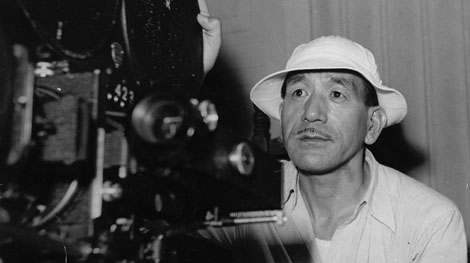
Battle Royale #10: Battle of the Japanese Masters (The Results)

And another Battle Royale has come to an end.  You were asked to make your choice between two Japanese cinema giants - Yasujiro Ozu and Akira Kurosawa.  Now, as some have told me, perhaps this is an unfair fight, for Kurosawa is so well known throughout the world, while Ozu is not nearly as famous in the West.  Maybe an Ozu vs. Mizoguchi fight would have been a better choice - a fairer fight.  But alas, 'twas not to be.  This is Ozu vs. Kurosawa, and since, I am assuming now, that most of my so-called fan base (if one can call it that without sounding too egotistical) are of the more cinephiliac bent, there should be no one claiming to not knowing the work of Ozu.  And let's face it, anyone who likes cinema, should be well aware of the works of Yasujiro Ozu, and if they are not, then shame on them.  But I digress.  Let us get on with the results of this supposedly slanted tenth Battle Royale.  

Of course, perhaps the preceding paragraph was merely just a way to more easily break it to all those Ozu fans and voters out there, that there boy lost the fight.  Yep, that's right fight fans, Kurosawa beat out his mentor and champion, by a cool four votes.  With 46 votes being cast (and yes, that number could and should be higher), the man who gave the world Seven Samurai (a film in my personal top ten btw) beat out the man who gave that same world Tokyo Story (not in my top ten, but still a great work of art), by a score of 25 to 21, or 54% to 46%, if you will.  Perhaps this is due to more people - more voters - being familiar with the works of Kurosawa over Ozu.  Perhaps not.  My vote went to Kurosawa, but that's just me.  I'm a fan of Keisuke Kinoshita after all, and no one knows who that is.  Anyway, congrats to AK and all that.  Let's talk about that aforementioned rather weak voter turnout this time around.  Pathetic even.  

So far, in Battle Royale history, our best turnout was the Battle of the Hollywood Hoofers, where Astaire took down Kelly, 34 to 32.  For those of you unskilled in basic math (and that is probably me a lot of the time), that is 66 votes cast, way back in our second battle.  Godard and Truffaut almost matched that, when they pulled in 64 votes in their battle, which, incidentally, was won by Godard, 34 to 30.  But other than those two rounds, voter turnout has been mostly in the fortysomething range, even dipping as low as a mere 28 when De Havilland took on her sister, Fontaine, and lost 15 to 13.  So my question, ladies and germs, is where the hell are all my voters!?  I know those classic and foreign film cinephiles are out there in cyberspace somewhere.  Must I pit Adam Sandler against Will Ferrell to get people to notice?  Clooney vs. Pitt?  Edward vs. Jacob!?  Now, even though I dig both Clooney and Pitt (my vote goes to Brad), and watch as much modern cinema as I do classic, I am not going to do that with the Battle Royale.  No sirree.  I will stick with the classics of cinema.  

That being said, the goal, as I have been saying since almost the beginning, is to get those votes into the triple digits.  I know we can do it people.  I know we can.  But such an argument is null and void right now, since this Battle Royale is over and the next one will not be appearing until March 1st.  Why March 1st, you ask?  I will tell you.  As I am sure you have noticed, I have an Oscar poll running right now (unless you happen to be reading this more than a month after I have written it, then this whole thing is pretty much null and void) and since I do not want competing polls, Battle Royale will not return until after the Oscars.  So March 1st it is - and this one is going to be a real battle of the sexes.  Oh yeah, and get prepared to vote and making all your friends vote as well, because we are getting that vote count well into the triple digits, baby!  Until then, have fun.

Thursday, January 3, 2013

Battle Royale #10: Battle of the Japanese Masters

Happy New Year to all my faithful readers and true believers.  Welcome to the tenth Battle Royale here at The Most Beautiful Fraud in the World.   It is an ongoing series that will pit two classic cinematic greats against each other - and you can vote for who is the greater by clicking your choice over in the poll at the top of the sidebar.

For our first Battle Royale of 2013, we are traveling to the Far East.  To the Land of the Rising Sun.  To Japan, and to the great masters of their long and vast cinematic tradition.  It is a battle between the man considered the most Japanese of all Japanese directors and the man known as the most Western.   Of course, it is Akira Kurosawa going up against Yasujiro Ozu.  It is the great samurai versus the great family man. Granted, Kurosawa was never a samurai, or even a swordsman, and Ozu was never a family man, having stayed single and living with his mother until her death, just two years prior to his own, but these are the films the two directors are most known for making.  Sure, Ozu made some social commentary films, and even a gangster film, and Kurosawa made many films that did not involve samurai or ronin, but their signature pieces are family dramas and comedies, or Gendai-geki if you prefer, and samurai, or Jidai-geki if you will, respectively.  Yes, there were other great Japanese masters, from Mizoguchi to Naruse to the oft-forgotten Keisuke Kinoshita, but when one thinks Japanese cinema, one surely, fairly or not, thinks of Yasujiro Ozu and Akira Kurosawa first and foremost.  And so, this is the battle we respectfully offer up to you now.

Ozu would come first, making his debut in 1927 (many of the director's early films are now, sadly lost), and hitting it big with his first great film, I Was Born, But..., in 1932.  Ozu's career was filled with many great films, mostly centering around traditional Japanese family life and marriage, and he is noted for influencing many a future filmmaker, most notably, his Battle Royale opponent.  Kurosawa made his first film in 1943, and through the help and encouragement of Ozu (he championed the younger director's first film, and helped to get it a wide audience), and came to great prominence, both inside Japan, and, in a real first for a Japanese director, across the globe, in the early 1950's, as films such as Rashomon and Seven Samurai made their way around the then-budding festival circuit.  To this day - fifty years after Ozu's death and final film, and almost twenty after Kurosawa's - these are still the two Japanese directors with which most western cinephiles identify.  Ozu is still considered the great master of classic Japanese cinema.  While everyone was making a big deal over Vertigo topping Citizen Kane in the most recent Sight & Sound critic's poll, Ozu's subtle masterpiece, Tokyo Story, was quietly voted the greatest film of all-time in that same organization's director's poll.  Meanwhile, Kurosawa is the more well-known name here in the west, and his Seven Samurai is pretty much a lock for any self-respecting greatest films list.  I know it is on mine.

So there ya have it kiddies.  Who will you pick as the greatest of the Japanese Masters?  All you need do is to go on over to the poll, found conveniently near the top of the sidebar of this very same site, and click on who you think is the greater of these cinematic legends.  And remember, you can comment all you wish (and please do comment - we can never have too many of those - and it will make me feel less lonely) but in order for your vote to be counted, you must vote in the actual poll.  After doing that, then you can come back over here and leave all the comments your little hearts desire.  Who knows, maybe we will get some sort of lively cinematic discussion going.  And also please remember to tell everyone you know to get out the vote as well.  I would like to see us reach triple digits in votes.  Voting will go until midnight, EST, the night of Friday, Jan. 11th (just over two weeks from the starting gate).  The results will be announced the following day.  So get out there and vote vote vote.

Thursday, August 9, 2012

The Most Influential Directors

The following is my official entry in The Most Influential Directors Poll over at Michaël Parent's great movie blog Le Mot du Cinephiliaque.  We critics and cinephiles were asked to name the 10 directors we believe to be the most influential throughout film history as well as the film that best showcases said influence.  My choices for last year's poll (where I extended it to 25 due to my tendency to ramble on) can be viewed here.  As I am sure you will notice, I have made some changes to this new list.  

These changes come about not necessarily because these directors became more or less influential over the past year, but because (and I am stealing a line from Prince now) maybe I'm just like my mother, she's never satisfied.  Whatever the case, I have flip-flopped numbers one and two, changed a few others up and/or down, kicked three to the proverbial curb and replaced them with three that missed the cut last time around.  And please take note that this is not a list of my favourite directors, but of the ones I believe have had the biggest and most influence on film history and later directors.  Granted, there are several crossovers on these two lists, but I digress.  So, without further ado, here are my choices for the most influential directors of all-time.

1) Jean-Luc Godard - It is a common assumption amongst cinephiles that without Jean Luc Godard, modern cinema would, at least the better qualities of it, look a whole hell of a lot different than it currently does.  I believe this is more than just mere assumption, and instead falls firmly into the realm of direct fact.  Jason Kliot, of Open City Pictures and Blow Up Films, says, "Godard to modern film is what Picasso is to modern art—the ultimate daredevil and pioneer, the man who had no fear, the man willing to try anything in any genre and push it to its limits." Along with fellow New Wavers, Godard not only changed the way cinema was made, but also the way we looked at it.  Without Breathless, a groundbreaking work of the art, or films like Band of Outsiders, Contempt and Weekend, we may not have filmmakers like Wong Kar-wai, John Woo, Gregg Araki, Wes Anderson, Gaspar Noe, Catherine Breillat, Chantal Ackerman or Quentin Tarantino.  Just think about that baby.

2) Alfred Hitchcock - I had Hitch in the top spot when I did this list last year, but he has been taken out by Godard.  But this by no means should make one believe that the Master of Suspense has fallen from grace.  In fact, let's face it, this is pretty much a dead heat tie for the top spot really.  An influence on so many directors, from Spielberg to De Palma to Terry Gilliam, Hitchcock has defined what cinema has become lo these past sixty years or so.  I think Hitchcock's influence is more noticeable than Godard's, with more homages having been created to honour him, but I believe Godard's influence is more ingrained in the creation of cinema itself than Hitch's.  But still, without Hitch, we would not have had such great films like Jaws or Dressed to Kill or Play Misty For Me or Peeping Tom.

3) Orson Welles - Godard said that without Welles, none of us would be here.  Can't argue with that.  Always at odds with those in power - Citizen Kane is really the only Welles production that came out the way the director wanted it, without interference from the studio and/or money men - Welles probably had a lot more inside him, but being the cinematic genius that he was, it was always so hard to get things done.  But what he did get done - Kane, Ambersons, Lady From Shanghai, Touch of Evil, The Trial, his Shakespeare work - is all beyond brilliant.

4) Akira Kurosawa - The man who made the samurai into a legendary hero that transgressed genres and nations and became the symbol of bravery and chivalry - even moreso than the knight of old - one need look no further than John Sturges’ The Magnificent Seven (a remake of Seven Samurai), Sergio Leone’s A Fistful of Dollars (based on Yojimbo) or George Lucas’ Star Wars (inspired by Hidden Fortress) to give credit where credit is most certainly due.  The most legendary of Japanese filmmakers who was actually more revered in the west than he ever was in his native land.  Good for us then.

5) Billy Wilder - I don't think there is a comedy today, be it high brow (Woody Allen's Manhattan) or low brow (Bridesmaids) that does not owe something to Billy Wilder.  And this was a guy who could do drama and noir and action just as well as comedy.  Simply put, he was so great at so many things, and without him, what would people like Woody Allen or Whit Stillman look like?

6) D.W. Griffith - I suppose without Griffith there would not be cinema at all.  No, he did not invent it, but he did re-invent it and made it what it became.  I also suppose that with this argument, one could easily make a case for the old Victorian charmer to top this list.  I mean, without him, there would be no Welles, and therefore no Godard, and therefore no modern cinema.  Hmmmm?

7) Howard Hawks - The man that could take any genre, from noir to western to adventure to musical to sci-fi to thriller to the screwball comedy that he near invented if not at least perfected, and make it sing like nothing else before it.  The precursor to such modern day equivalents as Steven Soderbergh and Richard Linklater, Hawks was, and always will be, simply put...The Man.

8) John Ford - The great man Ford claimed that he was just a guy who made westerns, but this modesty aside, he not only made westerns (and other types of films as well by the way) he made the western what it became and still is today - influencing everyone from Anthony Mann to Sergio Leone to Sam Peckinpah to Clint Eastwood to Andrew Dominick.

9) Stanley Kubrick - Kubrick is actually my personal favourite director of all-time, and his greatest masterpiece, 2001: A Space Odyssey is number two on my favourite films list, and I would guess that he sits pretty high up on those lists made by Scorsese, Wes Anderson, David Fincher, Chris Nolan, Tim Burton, the Brothers' Coen and Tarantino as well. 

10) John Cassavetes - Cassavetes' influence may be more on the improvisational style of acting in his films, than on his filmmaking techniques themselves.  Perhaps seeming to be too chaotic and and jumbled for mass audiences, nonetheless, the way Cassavetes and his stable of regulars would reach the deepest and darkest depths of human emotion is, save for perhaps Kazan, beyond reproach.

I could go on, but I will stop there.  To point out some other obvious runners-up though, one need only look at directors such as Charlie Chaplin, Buster Keaton, Jean Renoir, Vincente Minnelli, Ingmar Bergman, Federico Fellini, Fritz Lang, Ernst Lubitsch, Luis Buñuel, Sergei Eisenstein, Francois Truffaut, Martin Scorsese, Steven Spielberg, Elia Kazan, Nicholas Ray, George A. Romero, Francis Ford Coppola, Jacques Tourneur, Robert Altman, Woody Allen, Jacques Tati, F.W. Murnau, Mario Bava, Stanley Donan, and Michael Powell and Emeric Pressburger.  Just to name a few.